
Two stories about the same goods
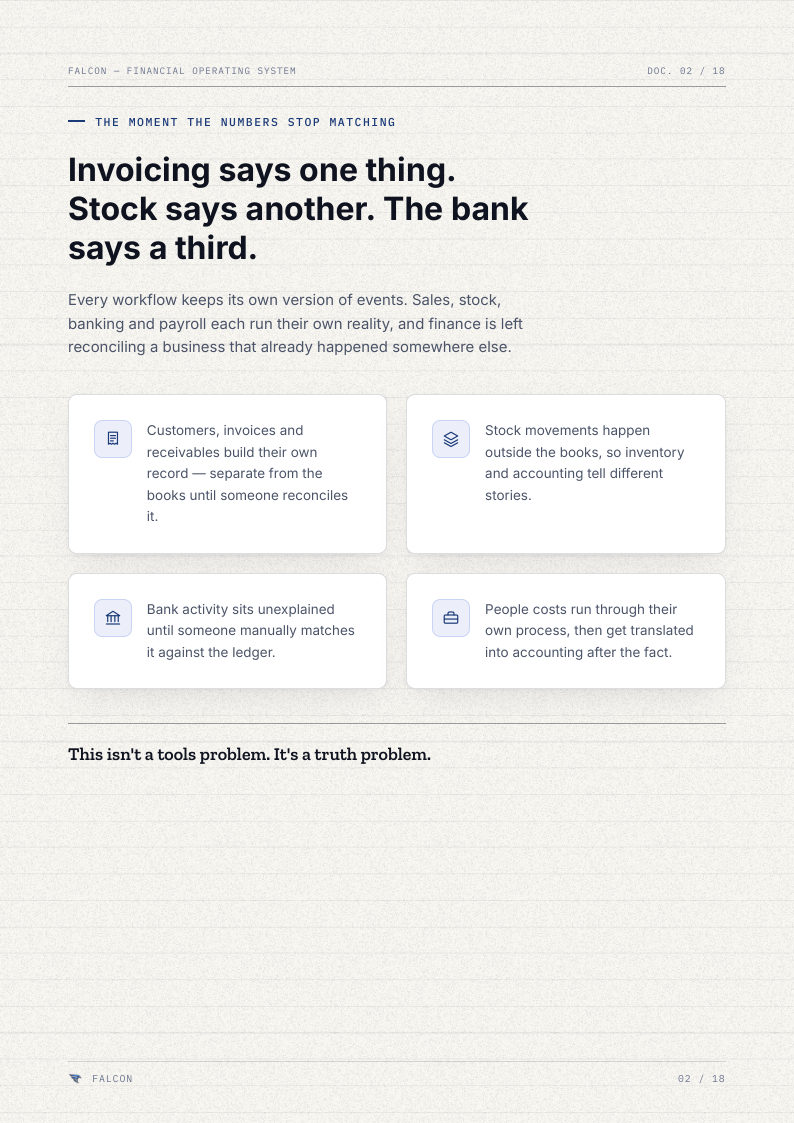
A distributor receives a delivery, sends some of it to customers during the month, and counts what is left. The warehouse register knows every movement. The account books know the purchase bill and the sales invoices. At month-end, someone has to make the two agree, and then work out what the leftover stock is worth.
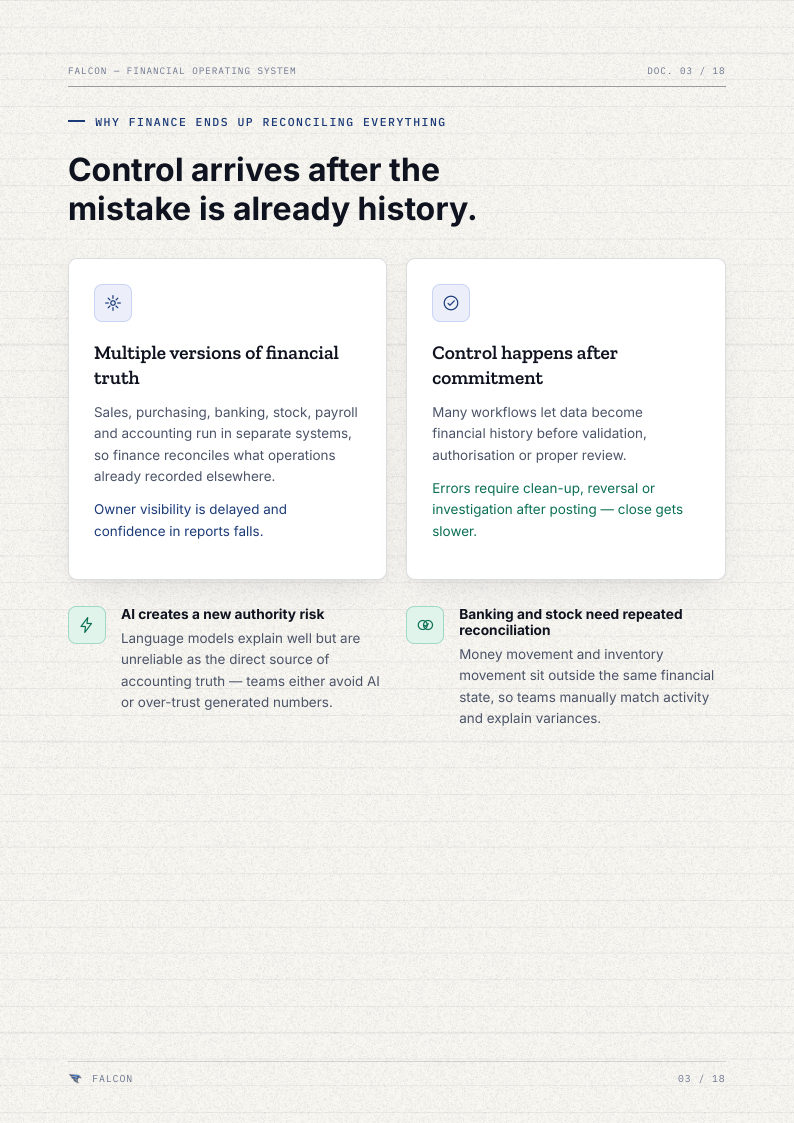
When stock moves outside the books, the stock register and the accounts tell different stories. That is the problem Falcon's Stock part is built to end.
Know what moved, and what it cost
In Falcon, stock movements are recorded in the same books as everything else.
- Stock in and stock out are recorded where they happen.
- How much you have comes from those movements, not from a separate register.
- What it is worth is linked to each movement, in the books.
- Manufacturing too. Falcon supports businesses that turn raw material into finished goods, not only those that move goods around.
The result is simple: your stock and your accounts stop telling two different stories.
Where your profit picture comes from
Profit on an item is what you sold it for minus what it cost you. The cost side only works if your stock records are right. When stock in, stock out and stock value are all in the books, “which items make us money?” becomes a question the system can answer. Falcon AI can answer it directly from your recorded entries.
Stock in the books → every movement linked to its cost → clearer stock and profit numbers. That is the chain the Stock part is built around.
Purchases in the same books
Stock rarely arrives without a supplier bill. Because Buy uses the same books, the bill that brings goods in and the record of receiving them sit together. There are not two systems to match.
The takeaway
If you sell goods and your stock and books disagree every month, the problem is not your warehouse team or your accountant. The problem is that stock lives outside the books until someone matches it later. Put the stock where the money is.