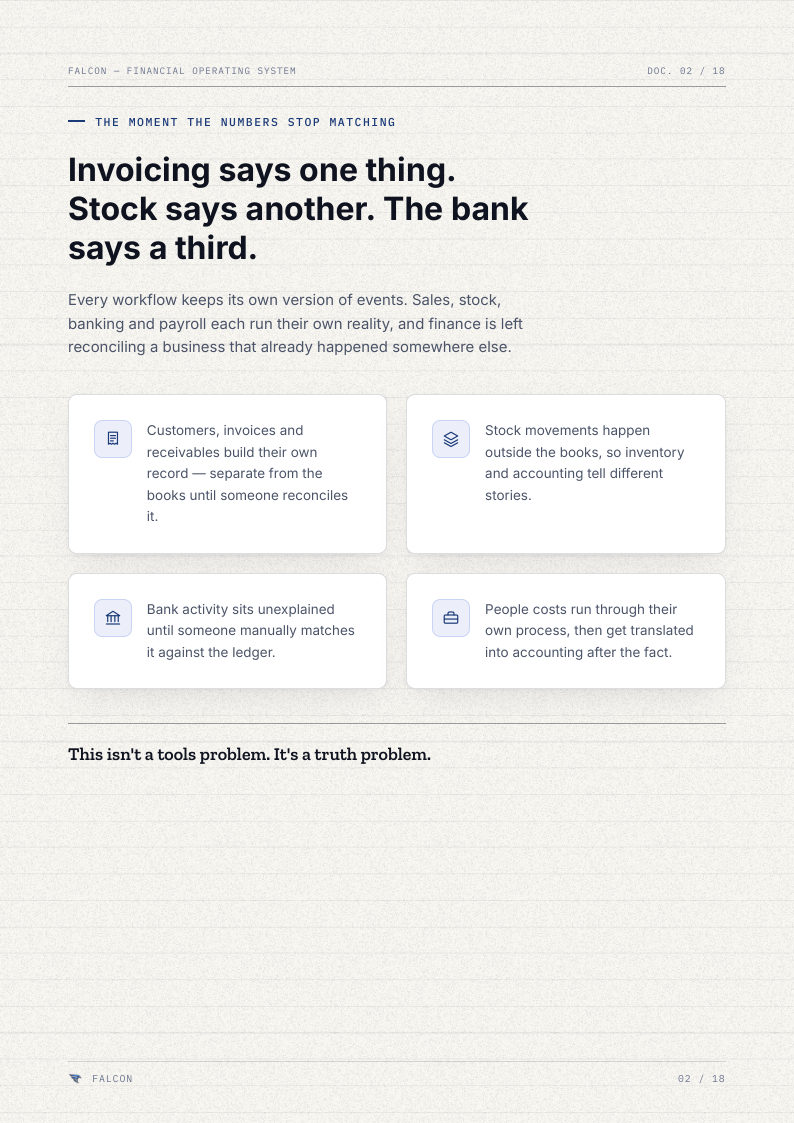


The day the numbers stop matching
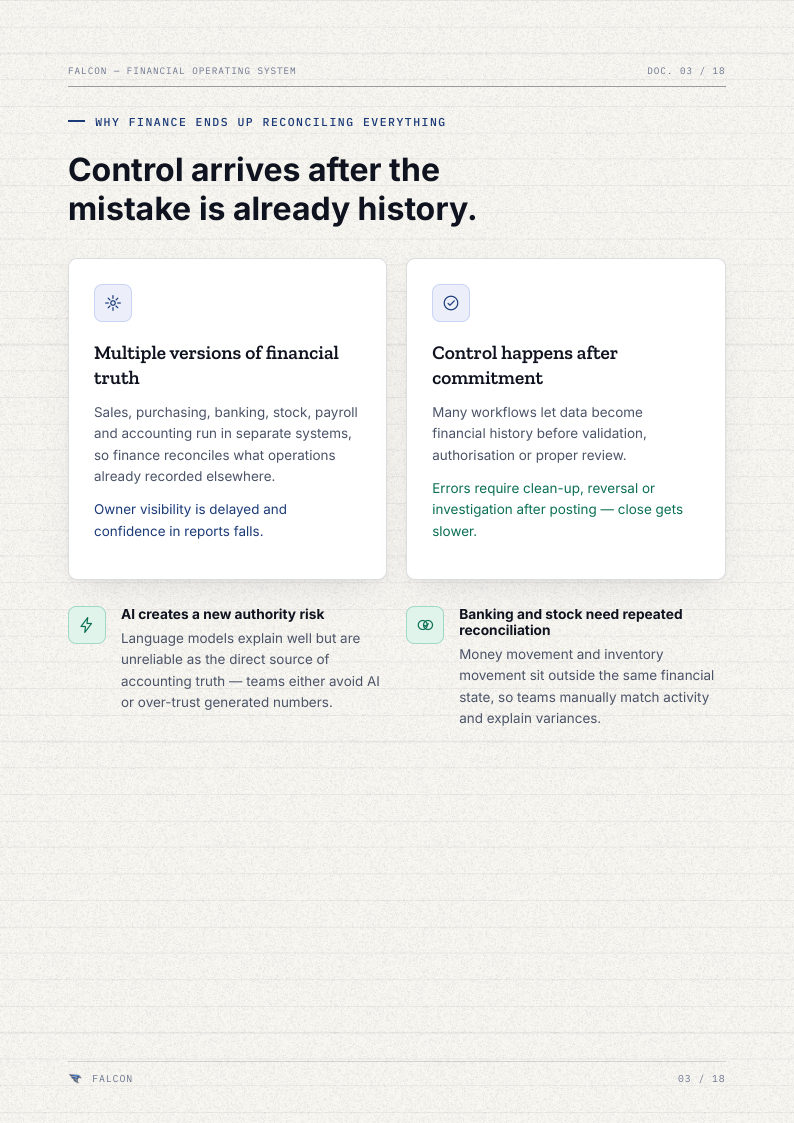
Think of a growing business on the last day of the month. Invoices were made all month in a billing app. Stock is kept in a separate register at the warehouse. Someone checks the bank statement against a printout. Salaries were done in a sheet last week. GST will be worked out later, once all the bills are collected.
The owner asks a simple question: how much money do we have, and how much are people still owing us?
Five people give five different answers. Nobody is lying. Each one is looking at a different record.
It is not really an accounting problem
It is easy to blame the accountant. But look closely. The invoices were made correctly. The stock register is correct. The bank statement is correct. The salaries were paid correctly.
The problem is that every team keeps its own record. So at month-end, the accounts team has to make five records agree with each other.
The real problem is usually not accounting. It is too many separate tools.
Why month-end takes so long
- Everything is matched by hand. Bank, stock and bills are matched before every month-end, because nothing was ever connected.
- Every new tool adds more work. Each new app or sheet is one more record to match.
- The owner waits. The numbers exist, but someone has to collect and explain them.
- AI does not fix it. An AI tool that reads five messy records just repeats the mess.
A faster accountant cannot fix this. Changing where the numbers live can.
What one set of books changes
Falcon is built on one simple rule: all your money work goes into the same set of books.
Invoices, purchases, bank entries, stock, salaries and the account books are not separate apps. They are different jobs that all write into one place.
- One sale, one record. The invoice the sales team makes is the same invoice the accountant sees and the same invoice in the “who owes us” report.
- Mistakes are caught early. Every entry is prepared, checked and approved before it is final. Fixing things later becomes rare.
- AI helps without taking over. Because the books hold the real numbers, Falcon AI can answer questions like “how much cash do we have?” without making up the numbers.
The change in one line. Before: separate records, record first and fix later, bank entries nobody can explain, stock outside the books, the owner asking five people. With Falcon: one set of books, check before recording, every bank entry matched, stock in the books, and the owner asking the system.
What this does not promise
Matching does not disappear completely. Bank entries still need to be confirmed. Stock still needs to be counted. Closing the month is still a careful step. The difference is that these become simple steps inside one system, instead of forcing five records to agree.
The takeaway
If month-end is mostly about matching numbers, ask one question before buying another tool: where do our real numbers live? If the answer is “in five places”, the fix is not a sixth place. It is one place for everything.
See how Falcon's parts connect or follow the six steps an entry takes.